
Sunday, November 15, 2015
Outfit Ideas

Thursday, November 12, 2015

Treatment
Its Time - Louis Stone
(Imagine Dragons)

Producer: A Godwin
Director: A Godwin
Louis Stone:
Louis Stone is a 17 year old student who is a singer song writer and is at the early stages of his career, he writes and produces music in his spare time and it is greatest passion. Louis was born in in Surrey, UK and grew up revolved around music as his dad was the drummer of a known indie rock band, but sadly never made it. Louis is very fashion conscious and always wants to keep up with he latest trends.
Music Video Concept:
The main concept of the song hat Louis is at the low point of his life, he's at college and isn't enjoying it what so ever, so he is likely to drop out, so he wrote this song to help him cope with the low points of life.
 The concept of the music video is how Louis is taking life easy and appreciating the little things in life. He's on a journey to freedom as he has dropped out of school and doesn't care about the money anymore.
There are lots of shots of Louis walking and singing into the camera showing his emotion and freedom with some very scenic backdrops to really emphasise the fact he has forgotten about school and is now free.
There will also be lots of close ups of Louis to see the true emotion of his face whilst singing to the camera. This will show the audience how he really feels and will make the audience feel like they are getting to know him and his story.
Style:
The style of the music video will be very colorful and vibrant as the song is about how he is taking control of his life e.g. green, blue, brown, white, yellows, but there will also be some dark colours as he is at the low point of his life. There will be a lot of shadows to add effect and make the video more aesthetically pleasing. There wil
l be props used to help back up the narrative.
Mood Board:

The main concept of the song hat Louis is at the low point of his life, he's at college and isn't enjoying it what so ever, so he is likely to drop out, so he wrote this song to help him cope with the low points of life.
The concept of the music video is how Louis is taking life easy and appreciating the little things in life. He's on a journey to freedom as he has dropped out of school and doesn't care about the money anymore.There are lots of shots of Louis walking and singing into the camera showing his emotion and freedom with some very scenic backdrops to really emphasise the fact he has forgotten about school and is now free.
There will also be lots of close ups of Louis to see the true emotion of his face whilst singing to the camera. This will show the audience how he really feels and will make the audience feel like they are getting to know him and his story.
Style:
The style of the music video will be very colorful and vibrant as the song is about how he is taking control of his life e.g. green, blue, brown, white, yellows, but there will also be some dark colours as he is at the low point of his life. There will be a lot of shadows to add effect and make the video more aesthetically pleasing. There wil
l be props used to help back up the narrative.
Mood Board:

Friday, October 16, 2015


Tuesday, October 13, 2015
Richard Dyers Star Theory
Richard Dyer
Richard Dyer was born in 1945, and he is an English academic specialising in cinema, As of 2006 he is Professor of Film Studies at King's College London.
Dyer proposes that a star is an image not a real person that is constructed out of a range of materials (E.g. advertising, magazines etc. as well as films).
Dyers theory can be constructed into sections:
Starts are made for money purposes alone. Increasing the brand identity benefits and institution as they become a household name increasing sales on all of the media platforms they are in. The institution then models the artist around the target audience they choose. For Example Lady GaGa, according to Dyer, was modelled around fashion forward people so the audience can relate to her as a person and also her music.
Constitutions:
This is more or less the same as the audience and institution part of his theory.
Hegemony:
This is also known as 'culture'. It is the idea that the audience relates to the star because they have a feature the share or admire with a star. Some fans may attempt to replicate the star in their behaviour, what they and what they do. But this could also be a negative impact as some stars often are heavy drinkers and drug abusers. For example in the 60's and 70's there was an increase of illegal sales of cannabis due to The Beatles being open about using it. Stars represent shared cultural values and attitudes, and promote a certain ideology. Audience interest in these values enhances their 'star quality', and it is through conveying beliefs, ideas and opinions outside music that performers help create their star character to their fans. A star may start a fashion trend, with masses of fans copying their hairstyle and clothing. Stars benefit from cultural discourse for example, via their Twitter feed. Now more than ever before, social networks give pop stars the opportunity to establish their own values outside their music. Lady Gaga tweets frequently about issues, and expects her “Little Monsters” (The name of which Lady Gaga calls her fans) to engage with that discourse just as much as she expects them to listen to her music.

Richard Dyer was born in 1945, and he is an English academic specialising in cinema, As of 2006 he is Professor of Film Studies at King's College London.
Dyer proposes that a star is an image not a real person that is constructed out of a range of materials (E.g. advertising, magazines etc. as well as films).
Dyers theory can be constructed into sections:
- Audience and Institutions
- Constitutions
- Hegemony
Starts are made for money purposes alone. Increasing the brand identity benefits and institution as they become a household name increasing sales on all of the media platforms they are in. The institution then models the artist around the target audience they choose. For Example Lady GaGa, according to Dyer, was modelled around fashion forward people so the audience can relate to her as a person and also her music.
Constitutions:
This is more or less the same as the audience and institution part of his theory.
Hegemony:
This is also known as 'culture'. It is the idea that the audience relates to the star because they have a feature the share or admire with a star. Some fans may attempt to replicate the star in their behaviour, what they and what they do. But this could also be a negative impact as some stars often are heavy drinkers and drug abusers. For example in the 60's and 70's there was an increase of illegal sales of cannabis due to The Beatles being open about using it. Stars represent shared cultural values and attitudes, and promote a certain ideology. Audience interest in these values enhances their 'star quality', and it is through conveying beliefs, ideas and opinions outside music that performers help create their star character to their fans. A star may start a fashion trend, with masses of fans copying their hairstyle and clothing. Stars benefit from cultural discourse for example, via their Twitter feed. Now more than ever before, social networks give pop stars the opportunity to establish their own values outside their music. Lady Gaga tweets frequently about issues, and expects her “Little Monsters” (The name of which Lady Gaga calls her fans) to engage with that discourse just as much as she expects them to listen to her music.

Friday, September 18, 2015
Audience Research
How old are you?
"18 and like a half lol" Kellen Keene
"17" James Van Huyssteen
"17" Louis Hart
"17" Seb Hawkey
"18" Emily McEwan
"18" Robbie Milne
"17" George Biggs
"18" Kirsty Stent
"18" Konrad Stanecki
"19" Sam Van Huyssteen
Gender:
"Boy" Kellen
"Male" James
"Male" Louis
"Male" Seb
"Female" Emily
"Male" Robbie
"Male" George
"Female" Kirsty
"Male" Konrad
"Female" Sam
Favorite genre?
"i really enjoy listening to Alternative rock " Kellen
"Electro" James
"Grime" Louis
"Grime" Seb
"Pop/R&B" Emily
"Drum and Bass" Robbie
"Rock" George
"Pop,like chart music" Kirsty
"Rap" Konrad
"Alternnative Rock" Sam
How often do you watch music video's?
"i can't tell you the exact amount of time, but i'd say a few times a week " Kellen
"Rarely" James
"Hardly ever" Louis
"All the time" Seb
"Only when people tell me too" Emily
"Never" Robbie
"If i'm ever on YouTube i always end up on music videos " George
"Umm not very often" Kirsty
"A lot" Konrad
"i watch a lot of music videos" Sam
Tuesday, September 15, 2015
The Andrew Goodwin's Theory
The Andrew Goodwin Theory is a way of analysing music videos, Andrews method identifies 5 key aspects of the video that we the audience should look out for which are:
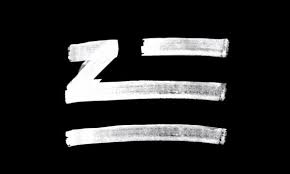 ZHU - Faded

- How do the lyrics and the video are related.
- What is the relationship between music and visual.
- Are there close-ups of the artist and star image motifs.
- Is there reference to the notion of looking
- Are there inter-textual references
This image flashes very quickly before the music changes. This image is ZHU's symbol that he uses on all the digipacks, posters, music videos. This relates to Andrew Goodwins point that recur across their work.

There is a relationship between music and visuals. The tone and atmosphere of visual reflects that of the music. When the music drops after the intro lots of flashy short clips are used to build a relationship with the music.

There is a relationship between lyrics and visuals. The lyrics are represented with images. The man in the music video is drinking, the lyrics describe him as 'wasted'

There is frequently references to notion of looking (screens with screens, mirrors, stages, ect.) and particularly sexually focusing on the female body.

Music videos demonstrate genre characteristics. (e.g. stage performance in metal videos, dance routine for boy/girl band, aspiration in Hip-Hop). In this music video because it is dance/house music, it is in a club.
Subscribe to:
Posts (Atom)